After 30 years as an aesthetician, I know that experience changes the way you care for people. You become more observant. You listen more carefully. You learn that the same treatment can produce different results on different faces—and that sometimes, the best decision is to do less.
Over the years, many of my clients have grown older alongside me. We have shared conversations about careers, children, relationships, and the changes we see in the mirror. Then I reached menopause myself, and something I understood professionally became deeply personal: how quickly your skin can change, even when you have been taking care of it for years. A routine that once worked beautifully may suddenly feel inadequate. That experience has made me more thoughtful about what I recommend, how I treat skin, and how I support women going through this stage of life.
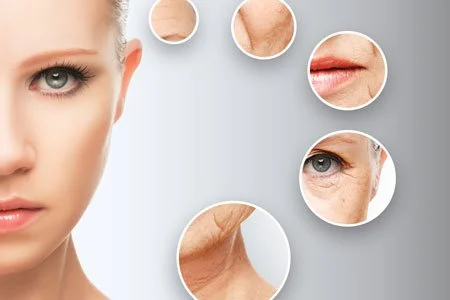
When your skin starts behaving differently During perimenopause and menopause, changing hormone levels can contribute to dryness, thinning, reduced firmness, and greater sensitivity. Some women also develop breakouts. These changes overlap with normal aging and years of sun exposure, so every woman’s experience is different. (pmc.ncbi.nlm.nih.gov)
What surprises many women is the pace. You may feel as though your skin changed before you had time to adjust. I want women to hear this: it does not mean you have failed to care for yourself. It means your skin may need a different kind of care now. What I look for in skincare during menopause My starting point is comfort, hydration, and a healthy skin barrier. Then we consider ingredients for concerns such as uneven tone and fine lines.
You do not need every ingredient below, and you do not need to introduce them all at once. • Ceramides: These lipids help support the barrier that keeps moisture in. A fragrance-free ceramide cream is a practical option when skin feels dry or easily irritated.
• Hyaluronic acid and glycerin: These ingredients attract water and help improve hydration. A hydrating serum can be useful, but dry skin usually needs a moisturizer over it. • A richer cream: If a light lotion no longer feels sufficient, consider a cream, particularly at night. Choose the texture according to your dryness and whether you are prone to clogged pores. (aad.org, aad.org)
• Niacinamide: This can be a useful ingredient in a routine for aging skin. Look for a gentle formula rather than assuming that the highest concentration will give the best result.
• Vitamin C: A well-formulated vitamin C product may help address uneven tone and signs of sun-related aging. Sensitive skin may need a gentler formula or less frequent application. (dermcoll.edu.au)
• Retinol: This can help improve the appearance of fine lines, uneven pigmentation, and texture. However, dry or inflamed skin may struggle with it. Start slowly if it is appropriate for you, use moisturizer, and seek a dermatologist’s advice if you have persistent redness or sensitivity. Burning and peeling are reasons to reassess your routine. (aad.org)
• Peptides: These are another option to consider for concerns about firmness and wrinkles. Results depend on the formula; no cream can promise to lift sagging skin. (aad.org) Does the jar need to say “menopause”? A menopause label alone does not tell me whether a product is right for someone. I look at the ingredients, the complete formula, and how the person’s skin responds. A thoughtfully formulated moisturizer may meet your needs beautifully even if “menopause” never appears on the packaging. Ordinary cosmetic moisturizers also serve a different purpose from prescription hormone creams. Facial estrogen treatments require a medical conversation, and hormone therapy is generally not recommended solely to improve skin appearance. (pmc.ncbi.nlm.nih.gov)
A simple place to begin In the morning, use a gentle cleanser if needed, moisturizer, and broad-spectrum SPF 30 or higher. Vitamin C can be an optional addition if your skin tolerates it.
At night, cleanse gently and apply a nourishing moisturizer. Introduce a treatment such as retinol only when your skin is comfortable enough to tolerate it.
Daily sun protection remains essential. Reapply sunscreen about every two hours outdoors and after swimming or sweating, following the product’s directions. (aad.org, pmc.ncbi.nlm.nih.gov)
If your skin is persistently itchy, inflamed, or developing a rash, a dermatologist can help identify the cause. Everything that happens at midlife should not automatically be attributed to menopause. (aad.org) What age has brought to Art Of Skin Age has given me more than years of practice. It has given me perspective. I understand how unsettling it can feel when the face you know starts responding differently. I also understand why women want clear answers about what deserves a place on their bathroom counter. At Art Of Skin Spa, my goal is to help you understand your skin, choose products with purpose, and adjust your care as your needs change. My training taught me how to treat skin. Experience taught me how to listen. Menopause gave me a deeper understanding of the woman in my treatment room.
Cornelia Chirila Founder, Art Of Skin Spa Boynton Beach, Florida (561) 371-3371 www.artofskinspa.com